Standards → implementations
Where are teams repeatedly translating standards, profiles, and schemas by hand?
This is what the shirt means
Kalo is open-source infrastructure for transforming structured specifications across representations, systems, and technologies using portable compiler plugins.
Own the spec. Change the stack. Regenerate.
Demonstrated today in software development. Designed for domains where structured knowledge must be translated, validated, or projected into different forms.
Proven today / software developmentMorphe / YAML → Kalo → Go · TypeScript · PostgreSQL
Exploring next / at GDC26Standards mappings · validation · interoperability · semantic transformations

Why I'm here
I'm at GDC to explore where reusable specification, transformation, and validation infrastructure can reduce repeated interoperability work across open standards.
Joining the data-portability conversation with the Vana and Linux Foundation communities.
Where are teams repeatedly translating standards, profiles, and schemas by hand?
Which mappings, validators, tests, and adapters should exist once?
What happens after trusted data reaches the relying party?
Kalo in 20 seconds
Describe the durable thing independently of a target stack.
Compose declared transformations across explicit format boundaries.
Keep the generated artifacts as implementation assets in your project.
Current proof
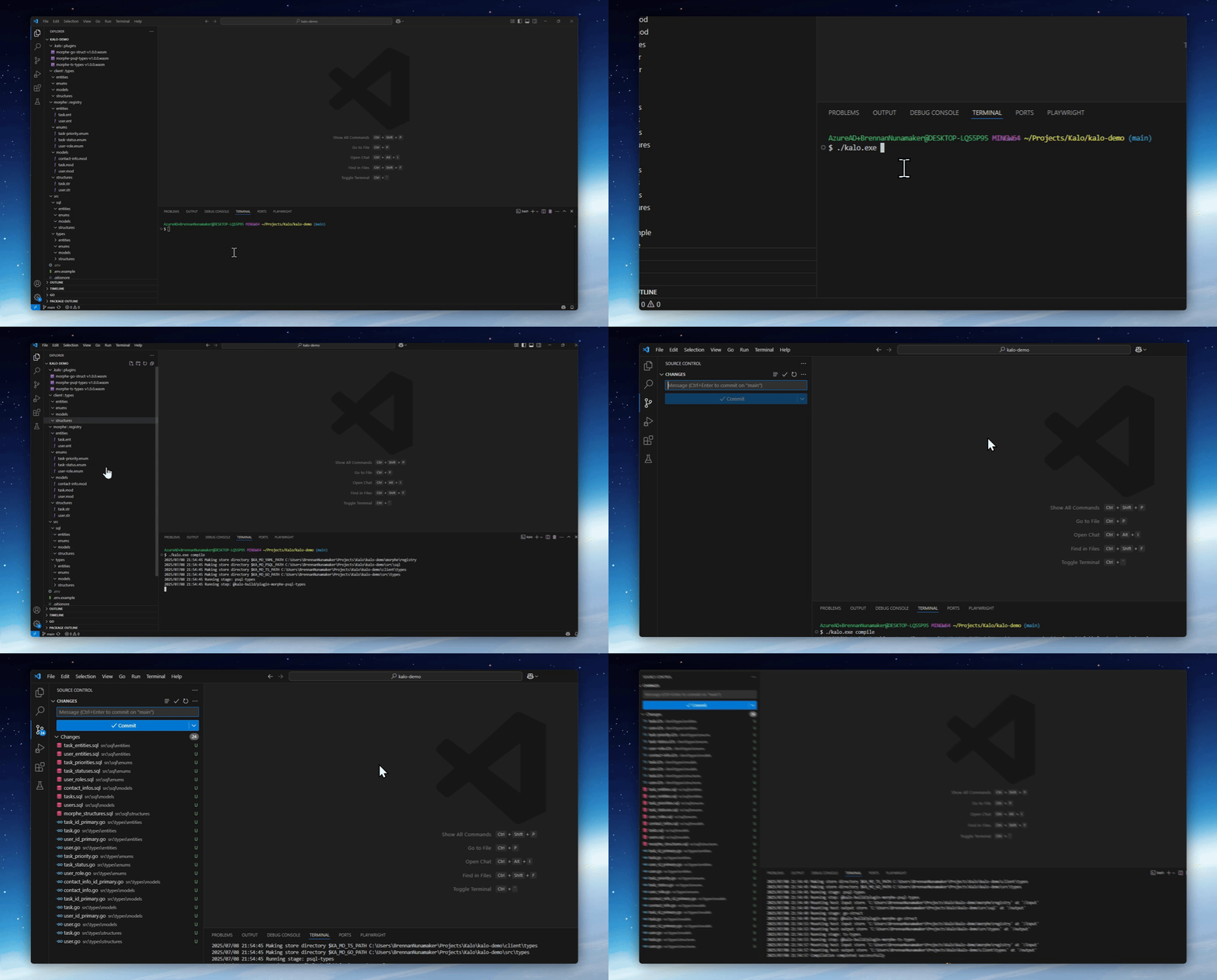
This is the real Kalo CLI compiling a Morphe YAML model across the stack.
Let's compare notes
you're dealing with any of these problem shapes:
Before the next session starts
Adjacent tools + research
Prepare reviewable cases while experts retain the decision.
Explore Velota ↗Tool / local-firstDevSpecsContext and bounded work for coding agents.
Explore ↗Tool / Markdownadr.zonePortable architecture decisions that stay with the code.
Create an ADR ↗Research / experimentalScopeLabsLearning scoped rules and transferable world structure.
Read the notebook →